In the rapidly evolving world of television and media consumption, IPTV (Internet Protocol Television) has emerged as a revolutionary technology that delivers television content over internet networks rather than through traditional satellite or cable formats. At the heart of this transformation lies the IPTV encoder – a critical component that makes streaming content possible. But what exactly is an IPTV encoder, and why is it so important in the IPTV ecosystem? Let’s explore this fascinating technology that powers the streaming experiences we enjoy today.
Understanding IPTV Encoders
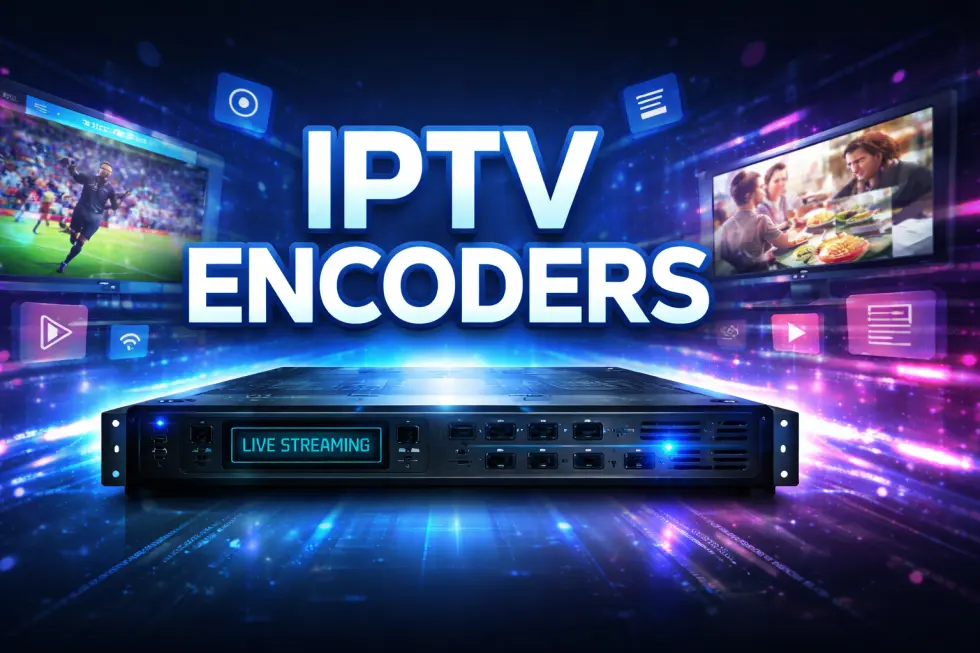
An IPTV encoder is a specialized device or software solution that converts traditional audio and video signals from various sources into digital IP streams that can be transmitted over internet networks. These encoders act as the bridge between conventional video sources (such as cameras, satellite receivers, and cable boxes) and the internet-based distribution platforms that deliver content to viewers.
The primary function of an IPTV encoder is to take raw video and audio feeds and transform them into compressed digital formats that can efficiently travel over IP networks without losing significant quality. This process is fundamental to IPTV service delivery, as it enables high-quality content to be streamed to users across diverse devices and network conditions.
How IPTV Encoders Work
Signal Capture and Processing
The encoding process begins with capturing the original video and audio signals. These can come from multiple sources:
- Live camera feeds
- Satellite receivers
- Cable TV boxes
- Media players
- Pre-recorded content
Once captured, the encoder processes these raw signals, preparing them for compression and transmission.
Compression Using Codecs
Perhaps the most critical step in the encoding process is compression. Uncompressed video files are enormous – a single minute of high-definition video can consume gigabytes of data. This makes them impractical for transmission over most networks.
IPTV encoders use video codecs (compression-decompression algorithms) to reduce file sizes significantly while maintaining acceptable quality. The most commonly used codecs include:
- H.264 (AVC): Still widely used, offering good compression efficiency
- H.265 (HEVC): The successor to H.264, providing approximately 50% better compression
- VP9: An open-source alternative used in some systems
- AV1: A newer, more efficient codec gaining traction
Audio is similarly compressed using codecs such as AAC, Opus, or MP3.
Packaging and Protocol Formatting
After compression, the encoder packages the content into a streaming protocol format that facilitates transmission over IP networks. Common protocols include:
- RTMP (Real-Time Messaging Protocol): Often used for live streaming
- HLS (HTTP Live Streaming): Apple’s adaptive streaming protocol, widely supported across devices
- MPEG-DASH: An adaptive bitrate streaming technology similar to HLS
- UDP (User Datagram Protocol): Used for efficiency in managed networks
- SRT (Secure Reliable Transport): A newer protocol designed for low-latency streaming
These protocols determine how the video data is segmented, packaged, and transmitted over the network, affecting things like latency, compatibility, and streaming quality.
Types of IPTV Encoders
Hardware Encoders
Hardware encoders are dedicated physical devices specifically built for encoding purposes. They typically feature specialized chips and components optimized for video processing.
Advantages:
- Superior performance and efficiency
- Lower latency
- Greater reliability for 24/7 operation
- Better handling of high-resolution content
- Less susceptible to system crashes
Disadvantages:
- Higher upfront cost
- Less flexibility for updates
- Physical installation requirements
Hardware encoders are typically preferred by professional broadcasters, large-scale IPTV providers, and organizations that require maximum reliability and performance.
Software Encoders
Software encoders run on standard computing hardware like servers, PCs, or even cloud instances. They perform encoding functions through software algorithms rather than dedicated hardware.
Advantages:
- More cost-effective for smaller operations
- Easier to update and upgrade
- Greater flexibility and customization
- Scalability through cloud deployment
- Remote management capabilities
Disadvantages:
- Generally higher latency
- More resource-intensive on host systems
- Potentially less reliable for continuous operation
Software encoders are popular among smaller IPTV providers, content creators, and organizations with budget constraints or flexibility requirements.
Key Features of Quality IPTV Encoders
When selecting an IPTV encoder, several key features differentiate premium solutions from basic ones:
Multiple Input Support
Quality encoders support various input types, including:
- HDMI
- SDI
- Component/Composite
- IP streams
- NDI (Network Device Interface)
This versatility allows operators to work with diverse content sources without needing multiple encoder systems.
Low Latency Performance
Latency refers to the delay between when content is captured and when it’s viewed. For live events, sports, and interactive content, low latency is crucial. Premium encoders can achieve latencies as low as 0.5-2 seconds, compared to 10+ seconds for basic solutions.
Bitrate Control
Sophisticated encoders offer precise control over bitrates, including:
- Constant Bitrate (CBR) for predictable bandwidth usage
- Variable Bitrate (VBR) for optimizing quality vs. bandwidth
- Adaptive bitrate capabilities for different network conditions
Resolution Support
As consumer displays improve, encoders must support higher resolutions:
- Standard Definition (SD)
- High Definition (HD – 720p, 1080p)
- 4K Ultra HD (2160p)
- Support for future 8K content
Reliability Features
Enterprise-grade encoders include:
- Redundant power supplies
- Automatic failover systems
- Hardware watchdogs
- Error recovery mechanisms
- 24/7 operation capability
Common Use Cases for IPTV Encoders
Live Event Streaming
IPTV encoders are essential for broadcasting live events such as:
- Sports matches and tournaments
- Concerts and performances
- Conferences and trade shows
- Breaking news coverage
These applications typically require low-latency encoding and reliable performance.
TV Channel Broadcasting
Traditional TV networks and new digital broadcasters use IPTV encoders to:
- Convert satellite feeds to IP streams
- Create digital versions of linear channels
- Provide multi-channel packages to subscribers
For professional IPTV services like those offered by BrixIPTV, high-quality encoding is critical to delivering a superior viewing experience.
Corporate Video Distribution
Organizations use IPTV encoders for:
- Internal communications and announcements
- Training and educational content
- Digital signage systems
- Company-wide events and presentations
Content Delivery Networks
CDNs utilize encoders to:
- Transcode content for multiple devices and bandwidths
- Create adaptive bitrate streams
- Distribute content globally with minimal latency
The Evolution of IPTV Encoding Technology
The field of IPTV encoding continues to advance rapidly. Recent and upcoming developments include:
AI-Enhanced Encoding
Machine learning algorithms now help optimize encoding parameters in real-time, improving quality while reducing bandwidth requirements.
Cloud-Based Encoding
The shift toward cloud infrastructure has made encoding more scalable and flexible, allowing providers to adjust resources based on demand.
Higher Efficiency Codecs
Next-generation codecs promise even better compression, with VVC (Versatile Video Coding) potentially reducing bitrates by up to 50% compared to HEVC.
What This Means for IPTV Users
While understanding IPTV encoders is valuable, most end users don’t need to worry about the technical details. When subscribing to an IPTV service, the quality of encoding is handled by the provider.
What matters for viewers is finding a premium IPTV service that invests in quality encoding infrastructure. This ensures:
- Crisp, clear picture quality
- Minimal buffering and stuttering
- Consistent performance across devices
- Low-latency live content
If you’re looking for an IPTV service that delivers professionally encoded streams with crystal-clear quality, BrixIPTV offers premium packages with meticulously encoded content. You can learn more about how their system works at their How It Works page or check out their affordable subscription options.
Conclusion
IPTV encoders represent the crucial first step in delivering streaming television content to viewers worldwide. By converting traditional video signals into efficient digital streams, they enable the flexibility, accessibility, and convenience that modern viewers expect.
For content providers and broadcasters, choosing the right encoding solution involves balancing quality, cost, and technical requirements. For viewers, the benefits of proper encoding are experienced through superior picture quality and reliable streaming performance.
As technology continues to evolve, we can expect IPTV encoding to become even more efficient, enabling higher quality streams with lower bandwidth requirements. This progress will further enhance the viewing experience for IPTV subscribers around the world.
Ready to experience premium IPTV with expertly encoded streams? Visit BrixIPTV to explore their plans or sign up for a free trial to see the quality difference for yourself.